Beyond the Hype: How Artificial Intelligence is Quietly Rewiring Our World
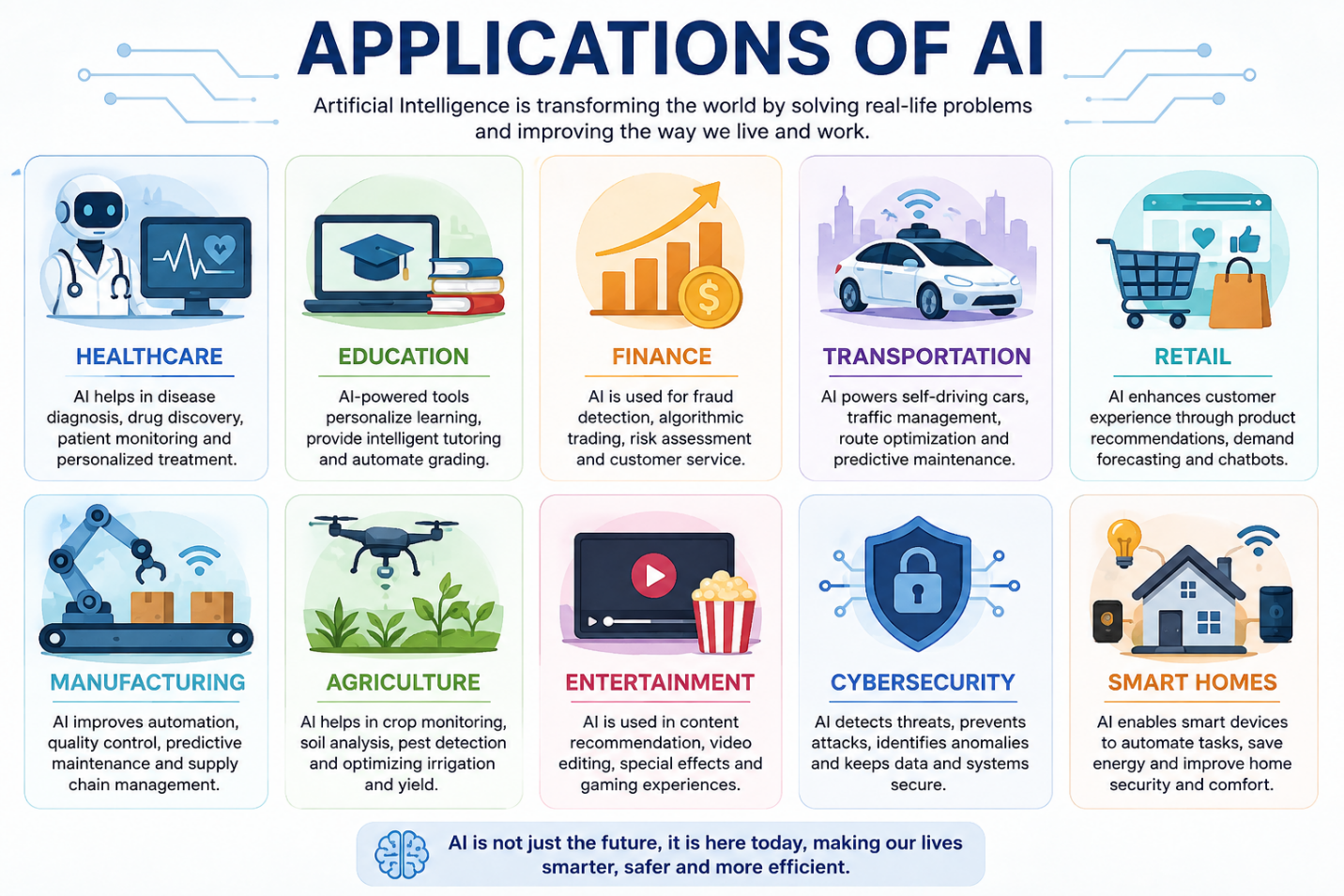
Artificial intelligence has officially transitioned from sci-fi novelty to the invisible infrastructure powering modern society. Whether it is diagnosing rare medical conditions before symptoms peak, routing global supply chains in real time, or simply curating your morning playlist, AI applications have become deeply woven into the fabric of daily life and enterprise operations.
Examining where and how these technologies are deployed reveals a clearer picture of AI's actual footprint across major industries.
Healthcare and Diagnostics
Medicine remains one of the most high-impact frontiers for artificial intelligence. By processing massive datasets of medical imagery, electronic health records, and genomic sequences, AI assists clinicians in making faster, more accurate decisions.
Medical Imaging Analysis: Computer vision algorithms can scan radiology scans—such as X-rays, MRIs, and CT scans—to detect early signs of abnormalities, tumors, or micro-fractures with precision that often matches or exceeds human specialists.
Drug Discovery: Traditional pharmaceutical research takes decades and billions of dollars. Machine learning models simulate molecular interactions and predict chemical properties, shrinking the initial drug discovery phase down to months.
Personalized Treatment Plans: Predictive models analyze a patient's genetic profile and lifestyle data to tailor oncology treatments and chronic disease management plans.
Finance and Banking
The financial sector thrives on data, risk assessment, and rapid calculation, making it an ideal environment for automated intelligence.
Fraud Detection and Prevention: Banks deploy real-time anomaly detection models that analyze transaction patterns, instantly flagging or blocking suspicious behavior to protect user accounts.
Algorithmic Trading: High-frequency trading algorithms execute millions of orders per second by parsing global news feeds, market trends, and economic indicators faster than any human trader.
Automated Credit Scoring: Alternative credit-scoring models evaluate non-tradition financial history, expanding banking access to underserved populations safely.
Everyday Consumer Technology
Many of the tools we use daily rely on embedded machine learning and natural language processing without requiring conscious thought from the user.
Recommendation Engines: Streaming services like Netflix and e-commerce platforms like Amazon utilize collaborative filtering and behavioral analytics to predict user preferences and deliver hyper-personalized suggestions.
Virtual Assistants: Speech recognition and semantic understanding enable tools like Siri, Alexa, and advanced generative chat interfaces to manage schedules, answer queries, and control smart-home automation.
Predictive Text and Translation: Smart keyboards anticipate typing patterns, while neural machine translation tools bridge language barriers instantaneously across text and voice.
Enterprise Operations and Marketing
In the corporate world, AI acts as a digital force multiplier, streamlining workflows and scaling personalization.
Customer Support Automation: Intelligent chatbots handle high volumes of tier-one support tickets, offering 24/7 resolution for routine inquiries while seamlessly routing complex human-centric issues to specialists.
Predictive Maintenance: In manufacturing and energy sectors, IoT sensors paired with machine learning predict equipment failures before they happen, drastically cutting downtime and maintenance costs.
Targeted Marketing: Generative AI and data analytics platforms allow brands to dynamically draft, test, and optimize multi-channel marketing campaigns tailored to micro-segments of consumers.
Transportation and Logistics
Moving people and goods efficiently requires dynamic routing and spatial awareness at a global scale.
Autonomous Navigation: Self-driving technology relies on sensor fusion—combining LiDAR, radar, and camera feeds—to map environments and navigate safely in complex urban conditions.
Supply Chain Optimization: Logistics giants utilize predictive analytics to forecast consumer demand, optimize warehouse inventory levels, and dynamically reroute cargo shipments around severe weather or port congestion.
The true power of artificial intelligence does not lie in flashy science-fiction tropes, but in its quiet ability to solve complex, data-heavy problems across every pillar of modern society. As these tools continue to mature, the focus is shifting away from what AI can theoretically do, and toward how responsibly and effectively we can integrate it into our work and lives.