What is driving the shift away from traditional chatbots?
User expectations have evolved significantly over the past few years. People now demand systems that can understand intent, maintain context, and complete tasks rather than simply provide pre-written answers. Businesses also require more flexible tools that can integrate with their workflows and adapt to unique operational needs. The rise of large language models has demonstrated what conversational AI can truly achieve. This growing gap between capability and expectation is pushing organisations toward more advanced solutions.
How do modern conversational AI systems differ from older chatbots?
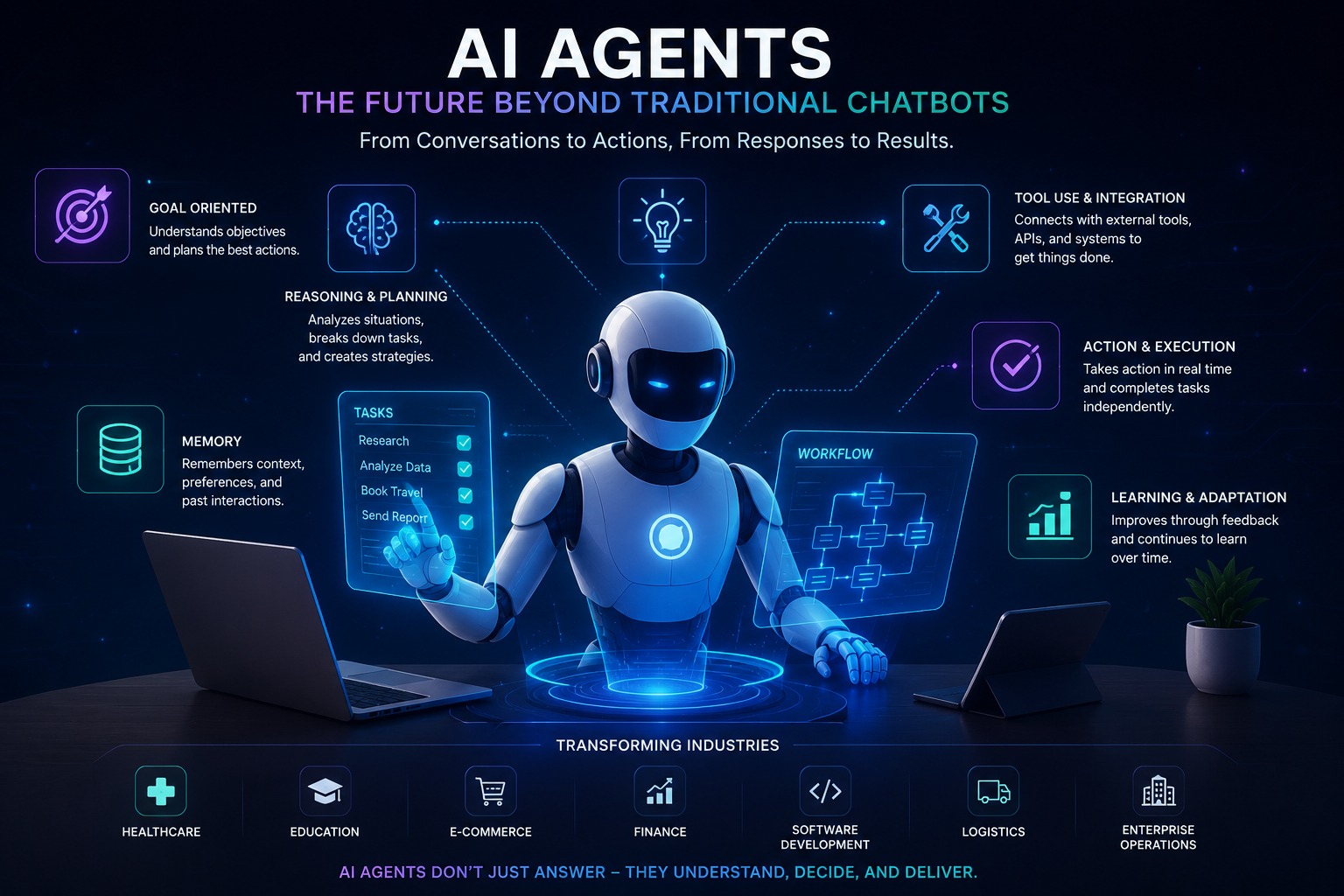
Traditional chatbots rely on decision trees and keyword matching to produce responses. Modern conversational AI systems use deep learning to understand nuance, context, and user intent in real time. They can handle multi-turn conversations without losing track of earlier details. Many newer systems also connect to external databases, APIs, and tools to retrieve or act on live information. This makes them far more versatile and useful in complex, real-world scenarios.
What role does natural language understanding play in next-generation AI?
Natural language understanding allows AI systems to interpret meaning rather than just match patterns. It enables machines to recognise sentiment, detect ambiguity, and infer what a user actually wants even when the request is phrased imprecisely. This is critical for applications in customer service, healthcare, and legal support where precise communication matters. Advances in transformer-based models have significantly improved this capability. As a result, interactions feel more natural and productive for users.
How is personalisation changing conversational AI?
Personalisation is becoming a central feature of modern AI communication tools. Systems can now learn individual preferences, past interactions, and behavioural patterns to tailor responses accordingly. This creates experiences that feel less like querying a database and more like speaking with a knowledgeable assistant. In e-commerce, healthcare, and education, personalised AI already improves outcomes and satisfaction. The more data an AI system can access responsibly, the more useful its personalised assistance becomes.
Will voice-based AI replace text-based chatbots?
Voice and text-based AI are likely to coexist rather than one replacing the other. Different situations call for different interaction modes — voice is ideal for hands-free tasks while text remains preferred for detailed or private communication. Multimodal systems that handle both formats are already emerging and gaining adoption. The key development is not the modality itself but the intelligence behind it. Systems that seamlessly switch between voice and text will offer the most flexible user experience.
How is conversational AI being used in business operations?
Organisations are deploying conversational AI across functions including sales, HR, logistics, and IT support. Automated assistants now handle tasks such as employee onboarding, invoice processing, and supply chain queries without human intervention. This reduces costs while maintaining consistent service quality around the clock. Companies also use AI to analyse conversation data and identify trends in customer feedback. The operational value goes well beyond answering questions — it extends to driving decisions and streamlining workflows.
What ethical concerns surround advanced conversational AI?
As conversational AI becomes more capable, concerns around transparency, bias, and misuse have grown louder. Users may not always know they are speaking with an AI, which raises questions of disclosure and trust. Biases present in training data can lead to unfair or inaccurate responses in sensitive situations. Privacy is another major issue, as these systems often process large volumes of personal data. Responsible development requires clear guidelines, regular audits, and strong data governance frameworks.
Can conversational AI support mental health and emotional well-being?
AI-powered conversational tools are increasingly being explored as supplementary mental health resources. They can provide a non-judgmental space for users to express concerns and receive structured coping strategies. Some platforms use AI to monitor language patterns and flag potential indicators of distress for human review. While they are not a replacement for professional care, they can improve access to early support. Careful design and clinical oversight are essential to ensure these tools are safe and effective.
How will conversational AI evolve over the next decade?
The next decade is expected to bring AI systems with significantly deeper reasoning and emotional awareness. Conversations with AI may become indistinguishable from those with informed human experts in many professional domains. Integration with augmented reality, wearables, and smart environments will extend AI beyond screens into everyday physical spaces. Autonomous agents capable of managing complex multi-step tasks on behalf of users will become mainstream. The trajectory points toward AI as a constant, capable companion in both professional and personal life.
What skills will humans need in an AI-augmented world?
As routine communication and information retrieval become increasingly automated, human value will shift toward creativity, critical thinking, and emotional intelligence. The ability to direct, evaluate, and collaborate with AI systems will become a core professional skill. Workers who understand how to frame problems for AI tools and interpret their outputs will have a significant advantage. Lifelong learning and adaptability will matter more than static technical knowledge. Ultimately, the most valuable professionals will be those who know how to think alongside machines rather than compete with them.